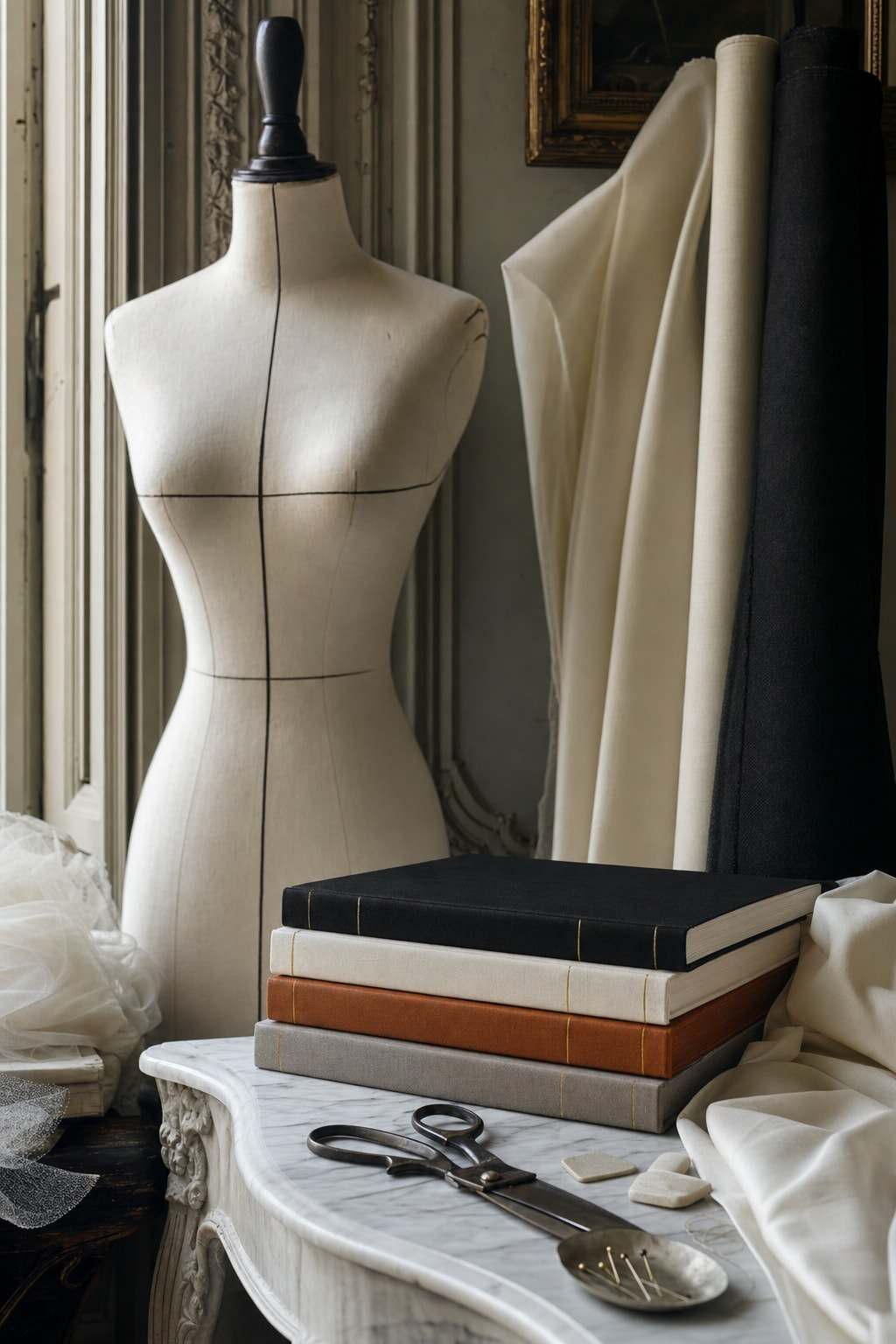
Fashion · 15 volumes
What we wear when we mean it
The art worn closest
Fashion
Fashion is the only art we carry on the skin. It meets us before we speak, it speaks when we cannot, and it holds the shape of who we hoped to be on a particular morning. The houses gathered here began as hat shops, saddleries, trunk makers and small ateliers. They became languages.
The hand before the name
Every famous silhouette began as a problem on a worktable. How should a jacket move when a woman runs for a train? How does leather age when it is carried every day for twenty years? How much of the body should a dress reveal, and how much should it protect? The answers were cut, pinned, stitched and unpicked again by people who rarely signed their work.
The name over the door came later. ICON ATLAS tells the story in the right order: the cutter and the seamstress first, the legend afterwards.
Freedom, tailored
Some of these houses changed what was permitted. Jersey taken from underwear into the salon. Trousers made into evening wear. A handbag given a strap so that two hands could be free. Fashion is often accused of vanity, but its greatest gestures have been gestures of liberty: clothes that let people move, work, travel, refuse and arrive.
Not every chapter is noble, and the books do not pretend otherwise. Occupation, collaboration and hard labour belong to this history too. The beauty is more convincing when it is told with its shadows.
Why it still matters
To dress with care is a small daily act of hope. It says: this day is worth something, and so is the person who will meet me in it. The great houses understood that elegance is not distance from life but a heightened attention to it.
Fifteen volumes follow that attention through ateliers, runways, workshops and boardrooms, and ask how a style becomes a memory a whole culture shares.
I gave women a sense of freedom. I gave them back their bodies.
The volumes
Fashion on the shelf
Fifteen volumes on the cutters, founders and rebels who made clothing into a way of being seen.